


What is Decentralized finance?
The concept of decentralized finance represents a revolutionary a revolutionary paradigm shift in the financial industry, leveraging blockchain technology to create an open, ransparent, and accessible ecosystem of financial products and services.
Unlike traditional finance, which relies on centralized intermediaries such as banks and financial institutions to facilitate transactions, DeFi operates on decentralized networks, governed by smart contracts and protocols, without the need for intermediaries. This decentralization removes barriers to entry, democratizes access to financial services, and empowers individuals to have full control over their assets and financial activities.
One of the key benefits of DeFi is its accessibility. Anyone with an internet connection and a compatible digital wallet can access DeFi services, regardless of their location or socioeconomic status. This inclusivity opens up financial opportunities to millions of unbanked and underbanked individuals worldwide, providing them with access to banking services, loans, savings, investments, and more.

Furthermore, DeFi offers unparalleled transparency and security. Transactions on decentralized networks are recorded on immutable ledgers, providing a transparent and auditable record of all activities. Smart contracts automate the execution of agreements, eliminating the need for trust in intermediaries and reducing the risk of fraud or manipulation. This transparency and security build trust among users and contribute to the resilience and reliability of the DeFi ecosystem.
Moreover, DeFi is reshaping the financial industry by introducing innovative products and services that were previously unavailable or inaccessible in traditional finance. These include decentralized exchanges (DEXes) for trading digital assets, lending and borrowing platforms, yield farming protocols, liquidity pools, synthetic assets, and more. These DeFi applications enable users to earn passive income, access liquidity, hedge against risks, and participate in global financial markets with unprecedented efficiency and flexibility.
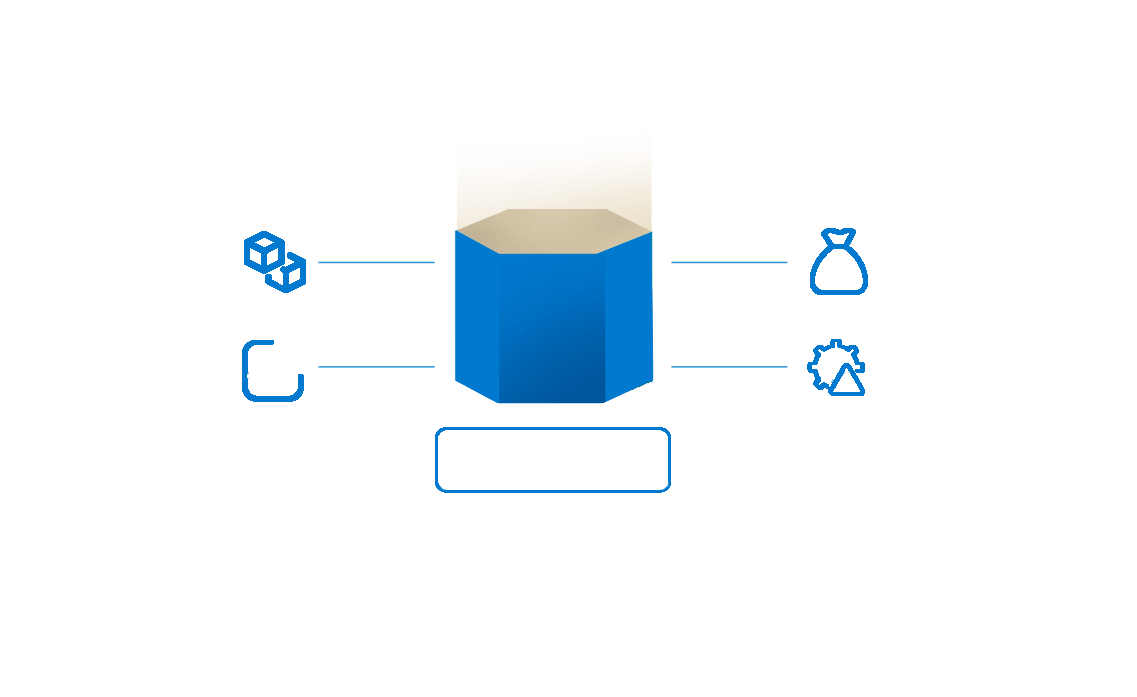
Transparency
Security
Accessibility
Profitability

The most significant aspect of Decentralized Finance is its elimination of custodial risk.
In traditional finance, individuals and institutions must trust a third party custodian such as banks or exchanges to hold and manage their assets; what makes investors with absolute no control of their actual investment. The centralized custody introduces counterparty risk, as custodians are vulnerable to theft, fraud, bankruptcy or assets seize. On the other hand, decentralized finance allows users to retain full control and ownership of their assets at all times. Thankfully, non-custodial wallets and smart contracts eliminate the risk of custodial failure and give users greater confidence and autonomy in managing their investments.
Decentralized Finance represents a very much needed transformative force in the financial industry, offering a more inclusive, transparent, and secure alternative to traditional finance. As the DeFi ecosystem continues to evolve and mature, it holds the potential to democratize finance on a global scale, empowering individuals and communities to achieve financial freedom and prosperity.
What is a Liquidity Pool?
Liquidity pools are considered a cornerstone on decentralized finance, representing a mechanism that harnesses the power of smart contracts to provide seamless and efficient trading experiences for users.
At its core, a Liquidity Pool involves locking up a specific quantity of two distinct digital currencies within a smart contract, creating a reservoir of liquidity. These two digital currencies are often referred to as trading pairs.
In the world of cryptocurrency trading, Decentralized Exchanges (DEXes) like Uniswap have introduced a groundbreaking approach that differs from traditional exchanges. Instead of relying on the traditional "order book" model, DEXes employ a concept known as a "liquidity pool", revolutionizing how markets operate.
Liquidity pool represents a remarkable innovation in the digital assets industry. These liquidity pools function as self-executing contracts, allowing any user to become a market maker by providing liquidity for a specific pair of assets that others wish to trade. In return for this service, liquidity providers earn fees, democratizing a function that was previously reserved for large institutional players.
To facilitate the smooth operation of liquidity pools, additional elements like Automated Market Makers (AMMs) come into play. AMMs leverage mathematical formulas to maintain the balance of these pools automatically. For a simplified understanding, consider the scenario when someone wants to exchange Token A for Token B. In the world of liquidity pools, there's no need to place a buy order and wait for its execution. Instead, the exchange occurs within the A/B liquidity pool, which consists of tokens supplied by various users, each of whom earns fees for their participation. However, the law of supply and demand influences the balance of tokens within the pool. When there's an imbalance between tokens A and B, more tokens of one type are required to obtain the same amount as the other.

When a company becomes a liquidity provider and supplies a pair of assets to a liquidity pool, they receive "receipts" known as LP tokens (Liquidity Provider tokens). These LP tokens represent the provider's ownership percentage within the total liquidity pool. The fees earned by liquidity providers are calculated based on this ownership percentage and are subsequently distributed proportionally among all liquidity providers. It's essential to note that the fees collected by a DEX are directed back to the liquidity providers. The remainder of the fees is utilized to cover the execution costs of the smart contracts on the Ethereum network, ensuring the efficient functioning of the ecosystem while avoiding the accumulation of surplus capital.

In summary, the transition from traditional exchanges to DEXes like Uniswap has brought about a transformative shift, powered by the concept of liquidity pools and AMMs. This innovation democratizes liquidity provision, enabling users of all sizes to participate and earn fees while maintaining the market's integrity. Understanding these principles is pivotal for anyone engaging in the dynamic world of decentralized finance.
What is a Decentralized Exchange?

Before the advent of DEXes, the cryptocurrency landscape presented two primary options for conducting token swaps. The first involved centralized exchanges such as Binance, where users were required to entrust their assets to the platform and leverage its internal trading system for transactions.
The second option entailed direct peer-to-peer trading, relying heavily on trust in the counterparty. In this trust-based model, one party had to send their share of the assets and trust that the other party would reciprocate in kind. Unfortunately, this arrangement left users exposed, as they were either dependent on trust in their counterparts or had to relinquish custody of their assets—a far from ideal scenario.
Custody holds a pivotal role in the cryptocurrency landscape, and it was one of the core motivations behind the inception of blockchain technology. Throughout history, governments worldwide have resorted to freezing their citizens' bank accounts, not to mention the high-profile security breaches that have plagued centralized cryptocurrency exchanges.
A notable example is the Kucoin incident in 2020, where hackers absconded with over $280 million worth of assets. In response to these challenges, DEXes emerged as a formidable solution, addressing a pressing market need. These decentralized exchanges empowered users by allowing them to retain custody of their assets, thereby facilitating transactions without necessitating trust in the counterparty. All of this is made possible through the implementation of open-source smart contracts.
In essence, DEXes represent a paradigm shift in the cryptocurrency trading landscape, affording users greater autonomy, security, and transparency in their digital asset transactions.This innovation has reshaped the way individuals engage with cryptocurrencies, fostering trustless and permissionless trading that aligns with the original principles of blockchain technology.Uniswap is the best-decentralized exchange example.
Uniswap, the largest and most revolutionary decentralized exchange, originally launched within the Ethereum ecosystem before later expanding its reach to encompass other blockchain ecosystems. Uniswap's approach to listing tokens represents a significant departure from the traditional centralized exchange model. To have a token listed on Uniswap, all that's required is the provision of liquidity, a straightforward process that unlocks a plethora of exciting trading opportunities.
There are several reasons why DEXes are considered better than traditional centralized exchanges (CEXes):

Security
DEXes eliminate the need for users to entrust their funds to a central authority, reducing the risk of hacks, theft, or mismanagement associated with centralized platforms. Users retain control of their private keys and funds throughout the trading process.

Trustlessness
In DEXes, trades are executed directly between users through smart contracts, removing the need to trust a central exchange with custody of funds. This trustless nature enhances security and reduces the risk of fraud or manipulation.

Censorship Resistance
DEXes are typically resistant to censorship since they are decentralized and operate on blockchain networks. Users can access and trade assets without restrictions, regardless of their location or regulatory environment.

Global Accessibility
DEXes can be accessed by anyone with an internet connection, providing equal trading opportunities to users worldwide. There are no geographical restrictions or barriers to entry, democratizing access to financial markets.
Overall, Decentralized exchanges offer a more secure, transparent, and inclusive way to trade cryptocurrencies. Compared to centralized exchanges, aligning with the principles of decentralization and financial sovereignty championed by the cryptocurrency community.
